
Solar Pool Heating: what it involves
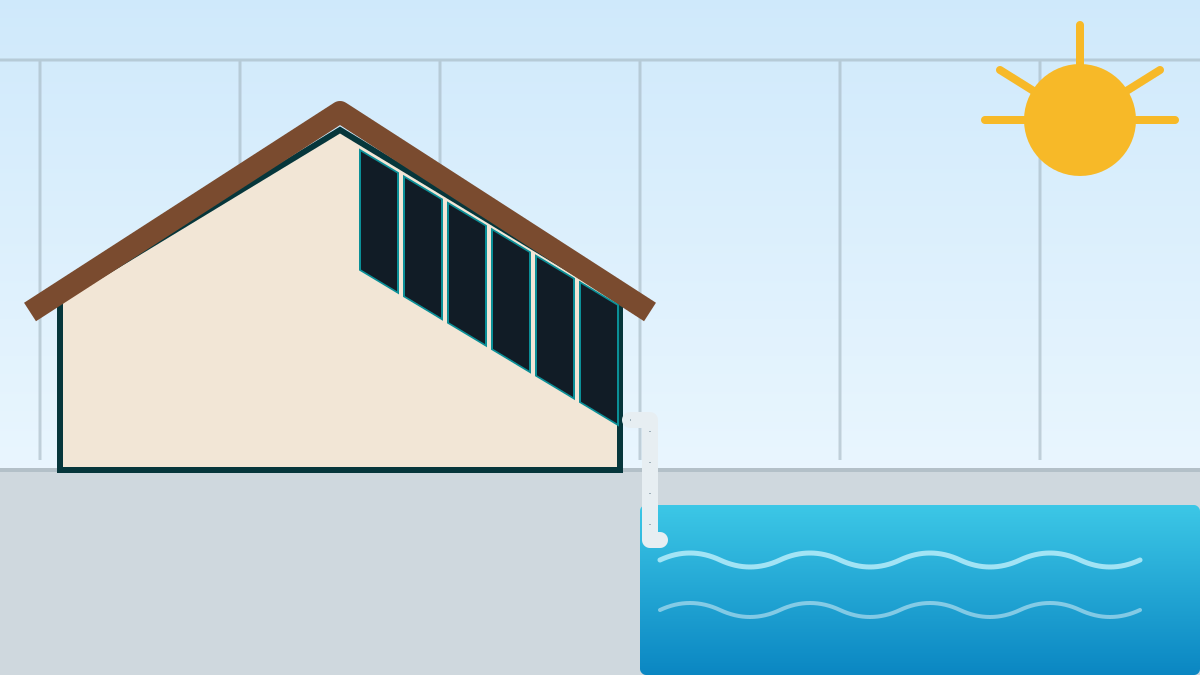
Solar pool heating is a set of black collectors on the roof that the pool pump pushes water through. A controller with two temperature sensors decides when the roof is warmer than the pool and turns a motorized valve to send water up. There's no compressor and no burner, so it costs almost nothing to run, and in Florida it can stretch the swimming season by months.
It does fail, though. Collectors crack from sun and age and start to drip onto the roof or into the gutters. Clamps and rubber couplers let go. The motorized valve sticks or its actuator burns out, so water either never goes up or never comes down. Sensors drift and the controller gets the decision backward. And every new roof means the whole system has to come off and go back on, which is a bigger job than many owners expect.
Signs solar heating needs service
- Water dripping from collectors or running down the roof when the pump is on
- Pool no warmer than it used to be on sunny days
- Valve actuator hums or doesn't move when the controller calls for heat
- Water draining back loudly or the pool losing water during the day
- A reroof is coming and the panels have to come off
Reroof coming? Book the solar removal before the roofer's date, not after.
Free EstimateCommon methods
Leak repair
Leaking collectors can often be plugged or patched; couplers, clamps and header connections are replaced. A collector that's split in many places is replaced.
Valve and controller repair
The tech tests the actuator, valve and both sensors, then sets the controller so water goes up only when the roof is warmer.
Remove and reinstall for a reroof
Collectors are drained, disconnected and stored, then remounted with new straps and roof penetrations sealed once the roofer is done.
Roof work, permits and your parcel
Repairing a leak or swapping a valve on an existing system is usually service work. Removing and reinstalling collectors during a reroof is tied to the roof job, and new roof penetrations and mounting may be inspected as part of it. Whether the city or the county reviews that depends on the parcel, so look up the address with the property appraiser and have the roofer and the solar tech agree on who handles what.
- Pasco parcels
- Pasco County Property Appraiser
- Hernando parcels
- Hernando County Property Appraiser
Search by address to see whether the parcel is inside a city or in the unincorporated county.
How a solar repair visit usually goes
- Watch it runWith the pump on, the tech checks for leaks, flow up to the roof and drain-back.
- Check the brainSensors and controller are tested; the actuator is run through a full cycle.
- Roof inspectionCollectors, headers, clamps and straps are checked, where the roof can be walked safely.
- Written scopeRepairs, replacement collectors or a reroof remove-and-reinstall are priced in writing.
- Repair and testAfter the work, the system runs on a sunny hour so you can see the water temperature rise.
If your roof is near the end of its life, ask whether new collectors make sense when the old ones come off.
What solar heating work costs
Small leak and valve repairs are usually modest jobs. A full solar system runs about $2,500 to $9,500 installed per Swimply's 2026 guide, and HomeAdvisor notes solar heaters cost about half as much as other types to repair on average and fail less often. Removal and reinstall for a reroof is priced per job.
Reference figure, not a quote: Swimply pool heater costs, 2026 guide, checked October 2026.
Fixing a leaking collector early protects your roof as well as the pool.
Free EstimateWhere solar pool heating shows up
- Bayonet PointOlder retirement homes with roof collectors
- HudsonFlat sunny roofs near the coast
- Holiday1970s and 1980s homes with original solar
- Spring HillLarge single-story roofs with collectors
- ElfersEstablished homes facing reroofs
- New Port RicheyOlder roofs carrying solar panels
Related services: Pool Heat Pump Repair, Pool Heater Replacement, Lightning & Storm-Damaged Heater Repair.
Solar Pool Heating questions
Will solar heat my pool in January?
It helps on sunny days but often can't keep up on its own through cold snaps. Many owners pair it with a heat pump.
Do the panels have to come off for a new roof?
Yes. They need to be drained, removed and reinstalled, so plan it with the roofer.
Is a leaking collector hurting my roof?
It can. Water running under shingles or into fascia can cause damage over time, so fix leaks promptly.